Official Breed Description – Australian Bulldog
General Appearance
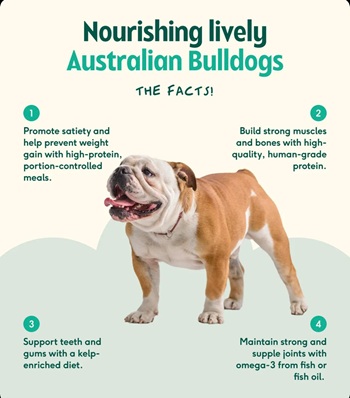
The Australian Bulldog is a medium-sized, powerful, and athletic dog developed to combine the classic bulldog appearance with improved health, mobility, and endurance. The breed should appear strong, compact, and well-balanced, without exaggerations. Despite its muscular build, the Australian Bulldog must be agile, active, and capable of sustained physical activity.
Breed Purpose
The Australian Bulldog was developed in Australia to create a healthier, more functional bulldog suitable for the Australian climate. Emphasis is placed on sound structure, natural breathing, efficient movement, and overall physical fitness while maintaining the traditional bulldog character.
Temperament
The breed is friendly, confident, loyal, and stable. Australian Bulldogs are known for their affectionate and family-oriented nature. They should be calm and reliable with people and children, showing no signs of nervousness or unwarranted aggression. A steady, balanced temperament is essential.
Head
The head is broad and strong, proportionate to the body. The skull is wide with good depth, but not exaggerated. Moderate wrinkle is acceptable, provided it does not interfere with vision or breathing.
Eyes
Eyes are medium-sized, round to oval, and set well apart. Eye color may vary, but should not be overly light. The expression should be alert, confident, and intelligent. No excessive haw or visible irritation.
Ears
Ears are medium in size and set high. Rose ears or semi-pricked ears are preferred. Fully erect or excessively large ears are undesirable.
Muzzle
The muzzle is moderately short and broad, allowing for free and unobstructed breathing. The nose must be clearly visible from the front. Extreme shortening of the muzzle is undesirable. Lips are clean and not excessively pendulous.
Nose
The nose is large with well-opened nostrils. Black is preferred, though other colors may be acceptable depending on coat color, provided breathing is not compromised.
Neck
The neck is strong, muscular, and of moderate length, flowing smoothly into well-developed shoulders. Loose skin should be minimal.
Forequarters
Shoulders are well laid back and muscular. Forelegs are straight with strong bone, set wide apart to support the chest. Elbows should be held close to the body.
Body
The body is compact and solid, with a broad, deep chest and well-sprung ribs. The back is strong and level, with a slight rise over the loin. The dog should never appear overly long or short-coupled.
Hindquarters
The hindquarters are powerful and well-muscled, providing drive and stability. Stifles are well bent, and hocks are set low. Rear legs should be parallel when viewed from behind.
Feet
Feet are compact, well-arched, and firm, with strong pads. Neither turned in nor out.
Tail
The tail is set low to medium, of moderate length, and carried low. Natural tails are preferred. Kinked or screw tails are acceptable only if they do not cause health issues.
Movement
Movement should be free, sound, and efficient, showing good reach in front and strong drive from the rear. The gait must be natural and effortless, without rolling, paddling, or restriction.
Coat
The coat is short, smooth, and close-fitting.
Color
All colors and patterns are acceptable, including brindle, fawn, red, pied, and solid colors. Color should never be prioritized over health and structure.
Size
Height and weight should be in proportion, with emphasis on balance and athletic ability rather than maximum size.
Typical weight range: approximately 30–45 kg (66–100 lbs), depending on sex and build.
Faults
Any departure from the ideal that compromises health, movement, breathing, or overall functionality should be considered a serious fault. Extreme features and exaggerations are strongly discouraged.